How to Check Brake Fluid Contamination in Cars & Superbikes
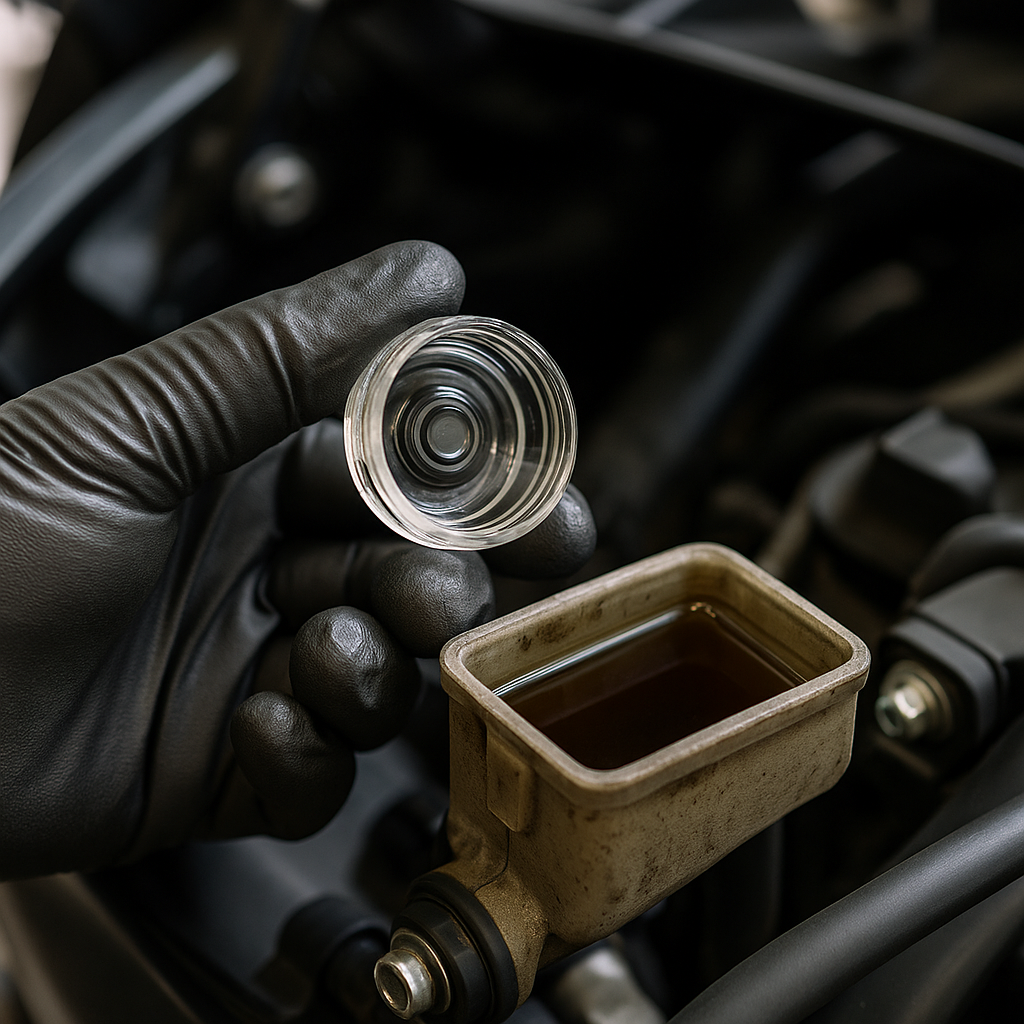
Brake fluid is one of the most neglected fluids in your car or superbike, yet it plays a critical role in safety. Over time, brake fluid absorbs moisture from the air, a process called hygroscopic degradation. This moisture contamination reduces boiling point, causes spongy brake feel, and quietly corrodes internal brake components from the inside out.
Most riders and drivers never check brake fluid condition until they experience brake fade or complete failure. By then, expensive damage to the master cylinder, callipers, and ABS module may have already occurred. The good news is that contamination is easy to spot if you know what to look for.
Fresh brake fluid is clear or light amber. If your fluid has turned dark brown or murky, it is contaminated with moisture, rubber particles, and oxidised material. You can also test boiling point using an inexpensive brake fluid tester available at most auto shops. If the reading shows below 180°C for DOT 4 fluid, it is time for a flush.
Another sign is brake pedal or lever feel. If your brakes feel soft or you need to pump them to build pressure, moisture has likely entered the system. This is especially common in India's humid monsoon months and in vehicles that sit unused for long periods.
Preventative flushing every two years or 30,000 kilometres keeps your braking system reliable and extends component life. For superbikes with high-performance braking systems or track use, annual replacement is recommended. Always use the manufacturer-specified DOT rating and never mix different types.
Brake fluid replacement is not a DIY job if you are unfamiliar with bleeding procedures, ABS systems, or dual-circuit setups. Air in the lines or incomplete bleeding can leave you with no brakes at all.
Motofy Garage offers professional brake fluid testing, flushing, and bleeding for all cars, superbikes, and ATVs in Jaipur. Our technicians use proper vacuum or pressure bleeding tools to ensure complete fluid replacement and air-free lines. Protect your safety and your wallet by checking your brake fluid condition today.